

Two jewelry showcases of the same width may call for very different lighting arrangements. One might display a single featured piece; the other might hold several groups of jewelry. If the light heads are spaced evenly based only on the cabinet dimensions, one product may be left in shadow while another head lights an empty part of the tray. With stem lights, it makes more sense to start with the product positions before deciding on the fixture layout.
Our CAI series is primarily focused on linear lighting, but it also includes stem-light solutions. For a selected CAI stem light, we support project-specific customization of the stem length or height, the number and spacing of light heads, rotatable heads, mixed-color finishes, and single- or dual-CCT configurations. These options can be built into the product for a project; they are not standard features on every model. This guide focuses on how designers and showcase manufacturers can match those choices to the merchandising plan before the cabinet drawings are finalized.
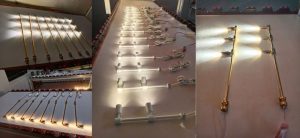
Mark the Product Positions Before Choosing the Number of Heads
We start by asking clients to mark featured pieces, other products, and trays on a plan view of the showcase. If there is one hero piece, the first question is where it will usually sit. If several groups are displayed together, we look at whether each position needs its own accent light or whether one group of heads can serve more than one position.
Cabinet length alone does not determine head count. Two cases of the same size can have different product densities, stand heights, and display priorities. We can customize the number of heads to suit the arrangement. In doing so, we consider product and price-label positions, how visible the stem will be inside the case, and whether staff will rearrange the display later.
Let Head Spacing Follow the Display Layout
Once the number of heads is clear, decide where they should sit along the stem. If the jewelry positions on a tray are not evenly spaced, distributing the heads at equal intervals may leave them misaligned with the pieces that need emphasis. We can customize head spacing around product centers and tray layout, while planning for displays that change regularly.
The lit sample still matters. Will the beams from adjacent heads overlap and make one area too bright? Will a dark gap appear between two display positions? The answers depend on the distance to the products, the selected optics, and the direction of the heads. Head count alone cannot settle these questions; check the final configuration in a sample showcase.
Check Stem Height and Head Direction Together
We can customize the length or height of a CAI stem light to fit the showcase structure, but this takes more than a single cabinet-height measurement. The stem’s position, the height of the products and display stands, and the directions from which customers view the glass all affect whether the heads can reach their targets.
We can also customize rotatable heads for the selected CAI stem light, allowing the light to be re-aimed when product positions change. After adjusting a head, check again for reflections in the glass and bright spots on metal or gemstones. View the sample showcase from the front and from an angle where customers would stand, not only through the open cabinet door.
Choose the Housing Appearance and Light Color Separately
We also support customized housing finishes for CAI stem lights, including mixed-color finishes. Our finish examples include brushed steel, champagne gold, black, and rose gold. The light source can be configured for a single color temperature or a dual-CCT option according to the project. If the design calls for switching between two color temperatures, include that requirement when defining the product configuration. Confirm the final appearance and light color on the selected sample.
The stem finish affects how the fixture relates to the case hardware and frame. The light color affects how customers see the jewelry and the surrounding materials. Specify them separately, then review them with the actual products in a sample case rather than judging from a standalone product photo.
What Should You Send Us to Discuss a CAI Stem Light?
A front elevation and plan view of the showcase are enough to make the first discussion more specific. Mark where fixtures can be mounted, the expected positions of products and trays, the main viewing directions, and whether the display will change frequently. If you have a target housing finish or light color, include a reference photo or physical sample.
We can use that information to define the stem length or height, head count and spacing, head rotation, mixed-color finish, and single- or dual-CCT configuration for the selected product. We then review mounting, wiring, and what needs to be checked in a sample case. For a broader introduction to this fixture type, read our guide to pole lights for jewelry and watch showcases. Once you have cabinet drawings, you can also review our customization process or contact us to share the details.
Frequently Asked Questions
Are all CAI series products stem lights?
No. The CAI series includes different showcase lighting products. This article focuses on its stem-light solutions. We support adding the custom options described here to a selected CAI stem light according to the project.
Are these options standard on every stem-light model?
No. Stem dimensions, head count and spacing, rotatable heads, mixed-color finishes, and single- or dual-CCT configurations can be customized for the specific product. We define the final configuration using the showcase drawings and an approved sample.
Will adding more heads always make a showcase brighter and more even?
Head count alone cannot tell you that. Head positions, optics, mounting distance, and product placement all affect the result. Identify the display positions that need light first, then check the balance between them in a sample case.
If the heads rotate, can product positions be decided later?
The main product positions should still be marked in advance. Rotatable heads provide room for adjustment, but stem placement, product obstructions, and reflections in the glass need to be considered before the showcase structure is finalized.


