


Introduction
In an art space, light itself is the most precious exhibit. It doesn’t just illuminate; it is the invisible hand that defines the space, guides emotions, and assigns value to the art. For architects and designers, mastering the use of light is the crucial step in elevating a design from a mere “building” to a “sanctuary.”
However, professional art gallery lighting faces a formidable challenge: finding the perfect balance between stunning visual impact, absolute color fidelity, and the architectural aesthetics of the space itself. This requires an ultimate fusion of artistic sensibility and scientific precision.
This ultimate guide will systematically break down every key aspect of professional lighting for art, empowering you with the core competencies to use light as an architectural material to shape world-class art spaces and commercial display lighting.
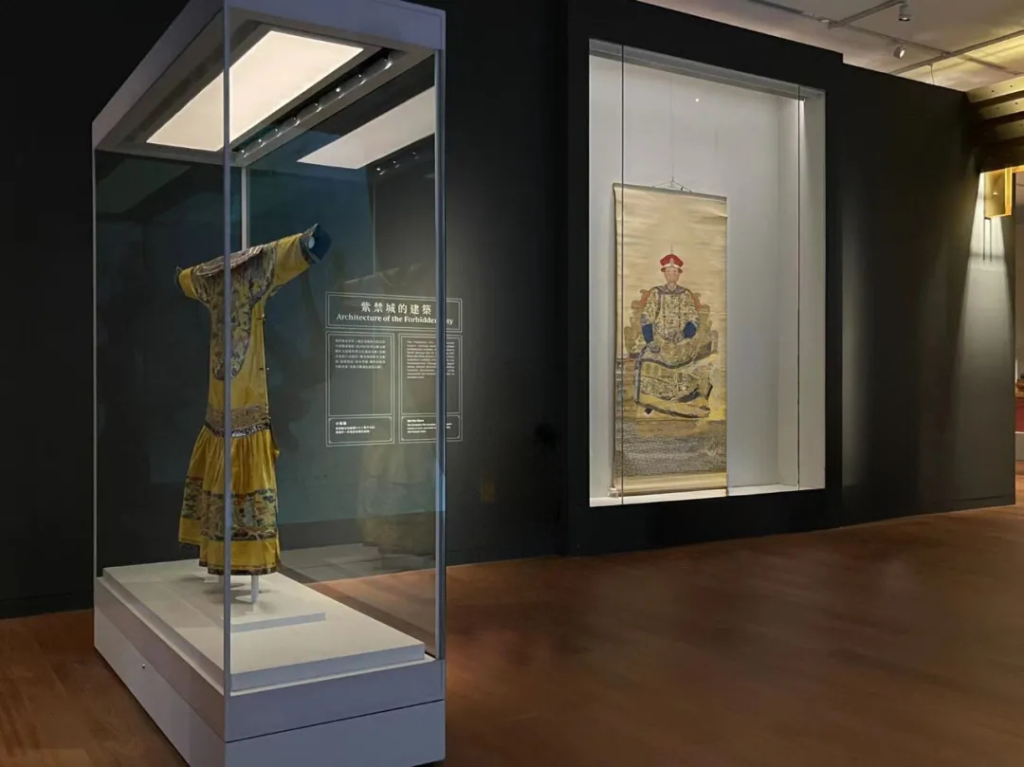
Part 1: The Soul of the Space – Why Architectural Lighting Defines the Gallery Experience
Light is far more than function. In an art venue, the philosophy of architectural lighting lies in how it shapes the visitor’s experience.
1.1 Light as the “Primary Curator”: Guiding Visual Focus and Narrative Flow
The moment a visitor steps into a gallery, their path is already being guided by light. Designers use the technique of Chiaroscuro (light and shadow) to create a visual hierarchy. Bright areas attract the eye, becoming focal points, while softer, even dimmer, transition zones create rhythm and pause, guiding the audience along a predetermined narrative, step by step, to explore and discover.
1.2 Light as the “Mood Regulator”: Crafting a Unique Spatial Atmosphere
Light is the most efficient mood regulator. Imagine a gallery displaying classical masterpieces; it would typically use warm color temperatures around 3000K to create a warm, dignified, and intimate atmosphere, transporting visitors to a salon from centuries ago. Conversely, a space showcasing contemporary installations might use neutral or cool white light of 4000K or higher to foster an avant-garde, calm, and thought-provoking ambiance. The tone of light directly defines the character of the space.
1.3 Light as the “Value Amplifier”: Enhancing the Perceived Value of Art
[Seeposh Insight]: “Based on our experience serving over 100 high-end brands, premium display lighting can directly increase the perceived value of an exhibit. We once upgraded the showcase lighting for a luxury jewelry brand. By precisely controlling the beam angle and using our proprietary high-density spectrum LEDs, we not only enhanced the diamond’s fire by at least 30% but also made the saturation of colored gemstones far exceed previous levels. Ultimately, the client reported a significant increase in sales for that product line.”
Part 2: The Science of Sight – The Non-Negotiable Technical Pillars of Lighting for Art
Artistic perception must be built on a foundation of scientific accuracy. In the field of professional lighting for art, the following technical parameters are the uncompromising cornerstones.
2.1 Absolute Color Fidelity: Beyond CRI to Embrace TM-30
In art lighting, a Color Rendering Index (CRI) of >95 is just the entry ticket. CRI primarily evaluates color “fidelity” but cannot fully measure color “saturation.” To more comprehensively assess light source quality, the industry is increasingly adopting the TM-30 standard. It evaluates not only fidelity (Rf) but also gamut (Rg), providing a more scientific reflection of a light source’s ability to render an object’s vibrant colors.
2.2 Precise Beam Control: Light Should Only Fall on the Artwork
True professional lighting means you see the light, not the fixture. This requires the light beam to be precisely controlled within the boundaries of the artwork, avoiding glare for the viewer or unnecessary light spills on the wall.
Beam Angle: Narrow beams (<15°) are used to accent small sculptures or details; medium beams (24°-40°) are suitable for most paintings; wide beams (>60°) are used for ambient lighting or wall washing.
Glare Control: Professional gallery fixtures are often designed with deep-set, anti-glare structures and honeycomb louvers to ensure the Unified Glare Rating (UGR) is below the industry standard of 13, providing the most comfortable viewing experience.
2.3 Long-Term Performance: Consistency and Stability
For large museums or retail chains, ensuring the color consistency of every single light is crucial. This requires the lighting supplier to adhere to extremely strict color binning standards (e.g., <3-step MacAdam ellipse). Furthermore, high-quality drivers eliminate invisible flicker, which not only protects the viewer’s eyesight but is also key to ensuring long-term stable operation and reducing maintenance costs.
| Color Temperature (CCT) | Recommended Application | Atmosphere Created |
| 3000K | Classical art, warm-toned pieces, wood interiors | Warm, intimate, elegant |
| 4000K | Modern art, mixed-media exhibitions, white spaces | Neutral, clear, professional |
| 5000K | Minimalism, black & white photography, industrial spaces | Cool, avant-garde, sharp |
Part 3: The Designer’s Playbook – Practical Strategies for Art Gallery Lighting & Display Lighting
With theory and technology mastered, let’s look at how to apply these strategies in practice.
3.1 Ambient vs. Accent Lighting: Building Layers of Light
A successful lighting design is always layered.
- Ambient Lighting: First, create a uniform, soft background light for the entire space using techniques like wall washing with asymmetric fixtures or concealed cove lighting. This eliminates dark corners and defines the spatial volume.
- Accent Lighting: Next, use adjustable track spotlights to “sculpt” each piece of art with an illuminance level 3-5 times higher than the ambient light, making it pop from the background and become a focal point.
3.2 Lighting 2D vs. 3D Artwork
- Paintings (2D): Avoid a single light source directly overhead, which creates unsightly shadows under the frame. The best practice is to cross-light from two angled positions, which eliminates shadows and reflections on glass and evenly illuminates the entire canvas.
- Sculptures (3D): At least three light sources are needed to reveal its three-dimensionality: a Key Light to create the main definition, a Fill Light to soften shadows, and a Back Light to separate it from the background.
3.3 Flexibility is Key: The Application of Track Lighting Systems
Exhibitions in modern museums and galleries are constantly changing, so the lighting system must be extremely flexible. Magnetic track and 3-circuit track systems are the most popular solutions today. They allow fixtures to be moved, added, or replaced freely along the track without rewiring, easily adapting to any new curatorial layout.
Part 4: Conclusion – Light is the Ultimate Building Material
Mastering architectural lighting means treating light as a building material as essential as concrete and glass. It is more than an assembly of technical specifications; it is a profound insight into space, art, and humanity. A true art gallery lighting design is a creation that moves effortlessly between technical precision and artistic perception.
Your next landmark architectural project begins with a deep understanding of light.
Ready to elevate your art space lighting to a new level?
Contact the lighting experts at Seeposh. With experience serving over 100 high-end brands worldwide, we can translate your boldest design visions into the professional language of light.
FAQ (Frequently Asked Questions)
Q1: What is the ideal color temperature (CCT) for an art gallery?
A: There is no single “best” CCT; the choice is typically between 3000K and 4000K. 3000K is warm and elegant, suitable for classical art. 4000K is neutral and professional, ideal for contemporary art and mixed exhibitions. The key is to match the CCT with the style of the art, the interior design palette, and the desired atmosphere.
Q2: How can I completely avoid reflections on paintings with glass frames?
A: The key lies in the projection angle and position of the luminaires. Avoid lighting directly from behind the viewer or straight from above. Positioning lights at an approximately 30-degree angle to the painting and using cross-lighting techniques will direct the majority of reflections away from the viewer’s line of sight. Using professional spotlights with anti-glare accessories is also crucial.
Q3: Can LED lighting damage artwork?
A: High-quality, modern LED lighting is currently the safest light source for artwork. Unlike traditional halogen lamps that produce significant amounts of ultraviolet (UV) and infrared (IR) radiation, museum-grade LEDs are virtually free of these two most damaging spectrums. When selecting fixtures, always verify the product’s UV/IR radiation specifications.


