

When a pop-up store closes, its showcases, display tables and branded backdrops may move to another venue, with the lighting intended for use again. Lighting the merchandise during the first installation is one requirement. The project also needs to establish which components travel together, which connections may be disconnected, how the complete set will be retained, and what must be checked at the next site.
When discussing pop-up store lighting, we recommend including the first setup, packing and handover, and the next installation in the same procurement brief. Define the display units you intend to reuse, then organize their component lists and handling documents. This gives the next team a reference for restoring the display.
1. Define which lighting components travel with each display unit
“We will use the lights again” needs to describe a specific unit for transport. Some projects move showcases with their lighting installed. Others remove the fixtures and pack them separately from the display table. In another arrangement, the fixtures remain in use while a new display structure is made for each venue. These plans have different requirements for construction, accessories and handover information.
During design, identify the following on the drawings:
- Parts retained with the display unit: Which fixtures, cables and supporting components remain inside the showcase or display table.
- Parts removed during dismantling: Which components will be packed separately, and whether the intended removal is permitted by the selected product's instructions.
- Parts provided by the venue: Which power, control or installation conditions need confirmation at the next site.
- Parts that may be remade: Which dimensions and interfaces need review if the display table, backdrop or support structure changes.
For example, imagine a group of jewelry showcases used at different shopping centers. If the lighting stays in the cabinets, the planning task includes protecting the installed fixtures and associated components during cabinet transport and retaining access for inspection. If fixtures are removed each time, the team also needs to confirm permitted removal points, accessory storage and reinstallation requirements. These are two planning scenarios; using the same fixture does not establish that both follow the same dismantling method.
If the project has specific requirements for repeated dismantling, tools or handling methods, raise them during the inquiry. The supplier should assess them for the selected construction and configuration.
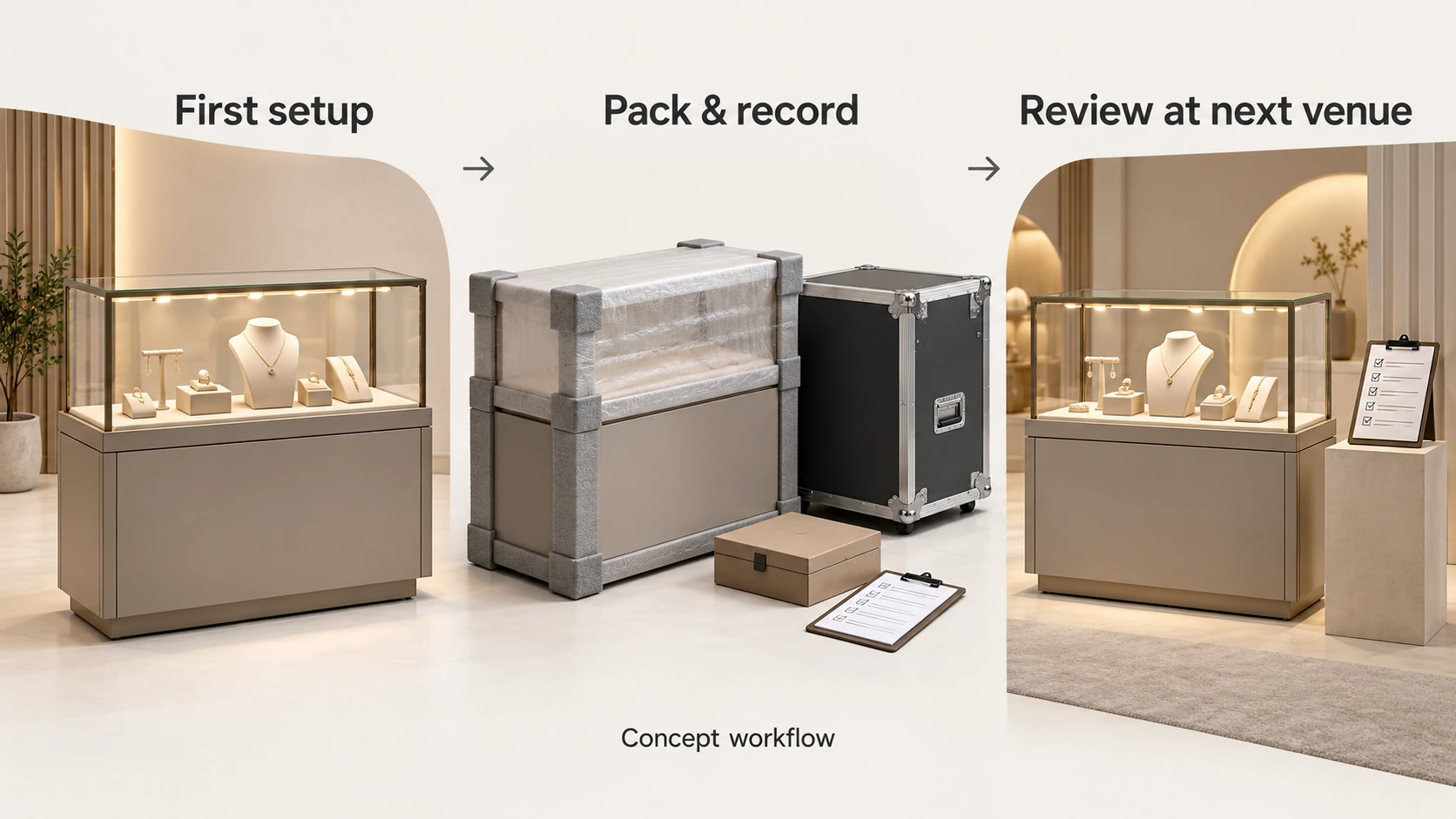
2. Include the conditions that may change at the next venue
An unchanged display unit can encounter different lighting conditions. It may move from the interior of a shopping center to a street-facing position, or meet different ambient lighting, customer routes and branded graphics.
List what will stay the same, then describe the conditions likely to change:
| Possible change | What to explain during procurement and design | What to review before the next use |
|---|---|---|
| Showcase arrangement, display height or backdrop position | Expected layouts and dimensional ranges | Whether light reaches the main merchandise or is obstructed by props and structures |
| Merchandise materials, bottle shapes or featured positions | Representative products and details to emphasize | Whether outlines, labels, surface details and reflections suit the new display |
| Ambient lighting, daylight and viewing directions | Main customer sightlines and site conditions | The brightness relationship between merchandise and background, and reflections in glass |
| Venue power and control conditions | Known requirements, with unresolved items marked for confirmation | Whether site conditions support the agreed complete lighting configuration |
| Transport routes, site access and dismantling arrangements | Transport units, access routes and handling restrictions | Whether the actual route and handling plan suit the packed display units |
Define the changes the lighting needs to accommodate. If featured merchandise will alternate between the ends of a display table, discuss the required coverage. If product and background brightness need separate adjustment, specify the control groups. The selected configuration should then define the available adjustments and functions.
For merchandise and backdrop changes, see our retail window lighting guide for changing displays. Touring displays also need records of their transport and venue requirements.
3. Keep fixtures, associated components and documents identifiable
After dismantling, fixture bodies, cables, fixings and power components may go into separate packages. The next installation team needs to know which parts belong together, which configuration revision applies, and what is missing.
We recommend organizing the inventory by display unit, then assigning identifiers to its lighting components. These can correspond to the drawings and packing positions. Place identification where it does not cover emitting surfaces or existing product labels, or interfere with use.
| Inventory item | Information to retain | Purpose during handover |
|---|---|---|
| Display unit | Unit identifier, overall dimensions and layout drawing revision | Establish which showcase or table the components belong to |
| Fixture configuration | Models, quantities, dimensions, optics and light color configuration | Restore the agreed scheme and identify fixtures requiring replacement or review |
| Associated components | Specifications and quantities for the corresponding power and control components, cables and fixings | Keep the approved combination identifiable and make accessory counts clear |
| Use and dismantling documents | Product instructions, permitted handling points, drawings and configuration revisions | Give the responsible team the documents for the selected equipment |
| Setup record | Fixture positions, aiming targets, control groups and accepted settings | Provide a starting point for adjustments at the next venue |
| Packing and condition record | Package identifiers, storage positions, missing or unresolved items, and inspection date | Show the receiving team what is complete and which issues remain open |
Where one power component supplies several fixtures, record the full group. Do not interchange parts from different kits merely because their plugs look alike. Matching should follow the agreed specifications and connection documents. Update the inventory revision when a component is replaced or an accessory added.
If existing fixtures and power components need reassessment, refer to our retail showcase light replacement compatibility checklist. The supplier and the electrical professional responsible for installation should confirm the actual combination.
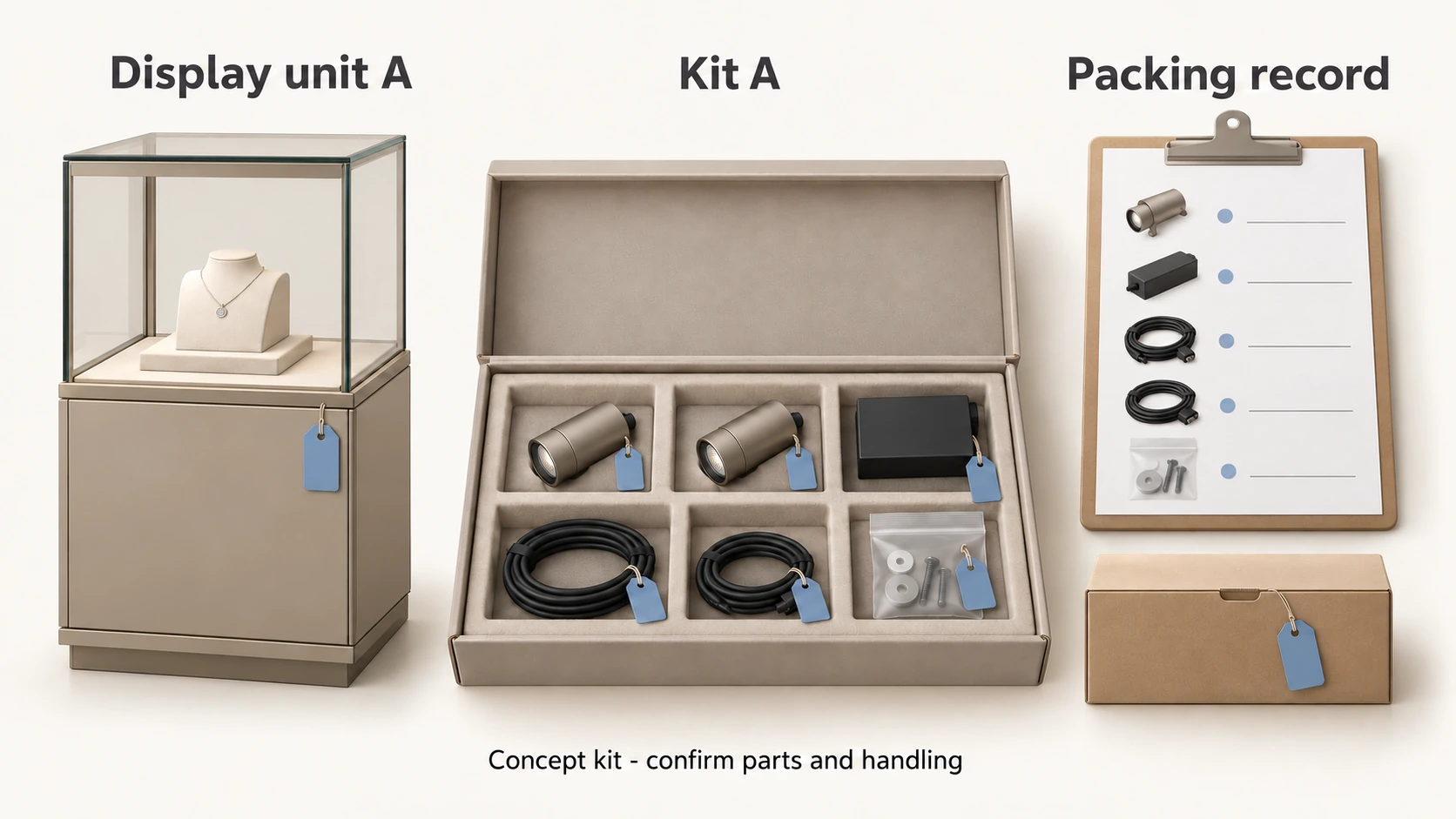
4. Review removal access during the first setup
A sample showcase or trial installation gives the project team an opportunity to check whether the dismantling requirements have been incorporated. Alongside the lighting result, the supplier, showcase maker and site team should review the intended removal route.
Will the fixtures stay in the cabinet or be removed separately? Which handling points need access? Can the team still reach them after the display is dressed? Which products, finishes or display elements must be moved first? Where will removed accessories be stored?
If a dismantling check is part of the agreed sample review, follow the product instructions and agreed sequence, and record the issues found. Incorporate changes to the construction, accessories or packing positions into revised drawings and inventories before confirming the final proposal.
The first setup record should also include the accepted merchandise arrangement, main viewing directions, aiming targets and applicable control settings. Photographs can help explain these relationships. Retain key dimensions, component models and configuration revisions in the inventory as well.
If the project requires evidence of performance after repeated dismantling, agree separately on the verification conditions and acceptance criteria. A single trial installation records the result of that particular check.
5. Hand over both component completeness and condition
The dismantling handover needs to answer two questions: have all the parts been collected, and what condition are they in?
After the site team completes the work in accordance with the applicable product and venue requirements, it can use the inventory to record:
- Quantities and matching sets: Whether fixtures, power components, cables and fixings have returned to the correct display unit, and which items are missing.
- Visible condition: Any looseness, breakage, damage to cables or connections, and issues requiring further inspection.
- Changes to the records: Whether components, layout or control settings changed at this venue, and which changes were approved.
- Packing positions: Which package holds each item, whether identifiers match the inventory, and which parts need separate protection.
Determine the packaging arrangement from the actual equipment, transport method and supplier's requirements. Document protection for optical surfaces and finishes, storage for loose accessories, and designated packing positions so the next team can identify the set when unpacking.
Mark components with unresolved issues as requiring attention and identify who will follow up. A visual inventory does not replace functional or professional checks required for the equipment. Resolve missing parts, repairs or configuration questions before the next installation.
6. Check the new site before restoring the lighting
Use the previous setup record as a starting point at the next venue. Before use, check the display units, component inventory and document revisions. The responsible team should confirm that site power, controls and installation conditions match the agreed configuration.
After setup, assess the actual merchandise, background and surrounding lighting together. From the main customer viewing positions, review product details and reflections. Check that featured merchandise is clear and items at the edges are not obstructed. Where daylight changes noticeably, review representative trading hours.
Previous aiming and brightness settings may need adjustment for the new backdrop and ambient light. Review changes within the selected configuration's permitted range, then save the accepted setup for this venue. If the existing equipment cannot meet the new display requirements, discuss the changes needed and update the complete set of records.
This lets the next team trace the original configuration and understand the changes made at each site. Planning for reuse should result in identifiable components, accessible documents and clear checks for every installation.
If you plan to use the same showcases or display tables at several pop-up venues, organize the display units, expected layouts, transport method and dismantling requirements with our custom retail lighting RFQ checklist. Through SEEPOSH's customization process, we can discuss suitable construction, configurations and sample review requirements for the project. Contact us to confirm which components need to stay with the display units and which conditions remain to be checked at the next venue.
Frequently asked questions
Can standard showcase lights be used for several pop-up displays?
First confirm the selected model's operating conditions, fixing and connection requirements, and intended transport arrangement. Moving lighting inside a cabinet and removing it for every installation require different assessments. Repeated dismantling capability and handling requirements should be confirmed for the selected configuration.
Does every new venue require a new lighting design?
Compare the new site's conditions with the original proposal. Where the display structure and components remain the same, start with the existing records. Review changes to merchandise, layout, ambient lighting, power and controls. Whether the proposal needs revision depends on how the existing configuration accommodates those changes.
How should spare components be planned?
Discuss the required spares with the supplier, considering critical components, replenishment arrangements and site responsibilities. Include corresponding specifications, permitted replacements and quantities in the same inventory. A record that says only “spare light” leaves its associated components unclear.
Can we request a proposal before the next venue is confirmed?
Yes. Start with display unit drawings, known site conditions and the expected range of changes. Mark unresolved power, layout and transport conditions, and identify who will provide them. Once the relevant conditions are confirmed, incorporate the final configuration and dismantling arrangements into approved drawings and documents.


