

Introduction
Walk into a high-end jewelry boutique. If the diamonds look like lifeless glass or the gold looks pale, the problem isn’t the merchandise—it’s the jewelry store lighting.
For luxury retailers, lighting is the silent salesman. It can increase sales conversion rates by enhancing the natural “fire” and brilliance of precious stones. But for the designers and contractors working behind the scenes, lighting up a glass display case is a technical minefield. You have to deal with reflections, heat buildup, and the eternal struggle of hiding bulky wires in sleek joinery.
In this guide, Seeposh experts break down the essentials of display case lighting—from the physics of sparkle to the practicalities of installation.
The Physics of Sparkle: CRI and Color Temperature
Why do some jewelry store lighting setups make products look mesmerizing, while others fall flat? It comes down to two specs: CCT (Correlated Color Temperature) and CRI (Color Rendering Index).
You cannot use a “one size fits all” light for a jewelry store.
- Diamonds, Silver, and Platinum: These require “cool” light (4000K – 5000K) to enhance their natural brilliance and fire.
- Gold and Colorful Gemstones: These need “warm” light (2700K – 3000K) to emphasize the richness of the metal.
But the real secret weapon is CRI. Standard commercial LEDs (CRI 80) miss parts of the color spectrum. For luxury retail, Seeposh recommends a minimum of CRI 97. This ensures that the deep red of a ruby or the subtle blue of a sapphire is rendered true to life.
(For a deeper dive into how light interacts with gemstones, the Gemological Institute of America (GIA) offers fascinating insights on diamond cut and light performance.)
The “Invisible” Fixture: Miniaturization Trends
In modern display case lighting, the goal is “Light without the Fixture.” The light source should be felt, not seen.
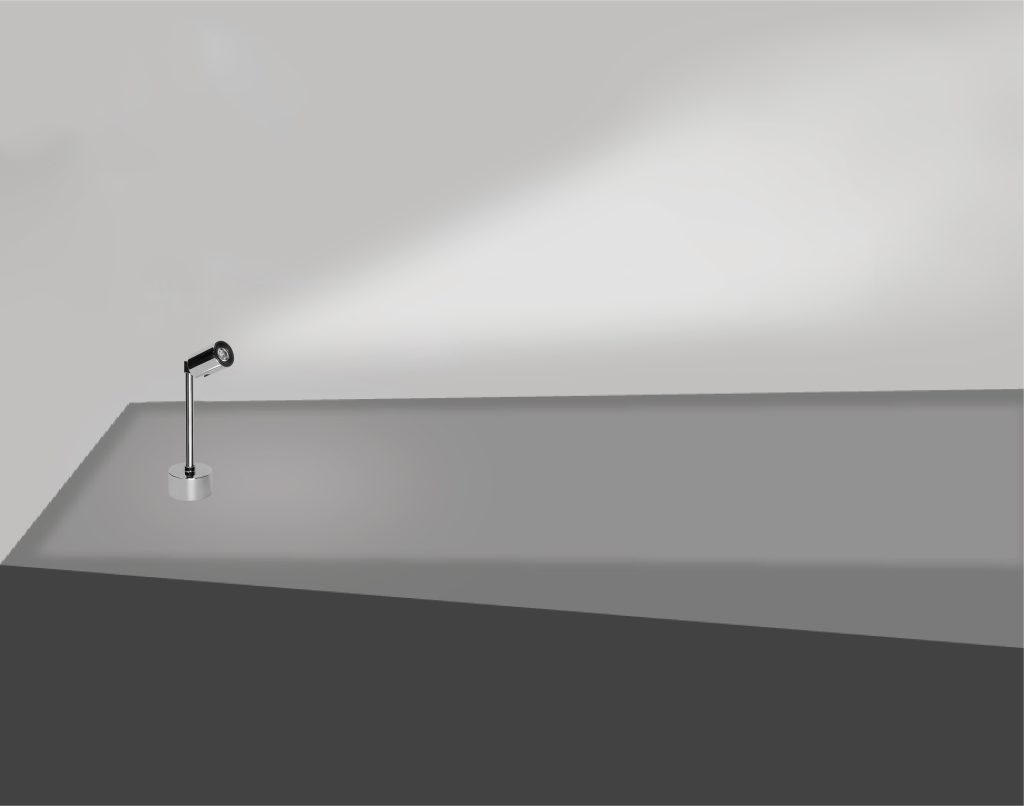
Traditional track lights are often too bulky for delicate glass cabinets. This is where the Mini Spotlight (or Stem Light) shines. By using ultra-compact heads (often smaller than a coin), these fixtures can be discreetly mounted in the corners of a showcase.
However, smaller doesn’t mean weaker. Using high-efficiency lenses, Seeposh’s mini spotlights can deliver powerful, punched light directly onto a watch face or a diamond ring from just 20cm away, without creating a cluttered look inside the cabinet.
The Installer’s Headache: “Where Do I Put the Driver?”
This is the number one complaint we hear from millworkers and electricians installing jewelry store lighting: “The light head is small, but the driver (transformer) is the size of a brick!”
In high-end joinery, space is money. Designers want thin legs and transparent glass bases, leaving zero room to hide bulky power supplies.
The Seeposh Solution: We designed our systems with the installer in mind.
- Remote Driver Options: We allow for longer low-voltage cable runs so drivers can be hidden in the cabinet base or even in a remote ceiling location, up to 10 meters away.
- Slimline Drivers: For local installation, our drivers are engineered to fit into standard narrow joinery gaps, ensuring you don’t have to redesign the cabinet just to fit the electrics.
This “Install-First” philosophy saves hours of on-site modification and reduces friction between the lighting supplier and the cabinet maker.
Protecting the Merchandise: Heat Management
Halogen lamps used to be the standard for jewelry, but they emitted enormous amounts of heat and UV radiation. In a closed glass display case, this heat can:
- Dry out leather watch straps.
- Discolor sensitive organic gems (like pearls or opals).
- Degrade perfumes and cosmetics.
Modern LED showcase lighting must be “Cool Beam.” Seeposh fixtures utilize advanced aluminum heatsinks that direct thermal energy away from the object. This ensures that even under high-intensity lighting (2000+ Lux), the temperature inside the case remains safe for delicate luxury goods.
(Learn more about the damaging effects of UV and heat on museum and retail objects from the Canadian Conservation Institute.)
Flexibility is Key: Adjustable Focus
Merchandise changes. Today you might be displaying a large necklace; tomorrow, a set of small earrings. Your jewelry store lighting needs to adapt.
Rigid, fixed lighting bars are a nightmare for visual merchandisers (VMs). Seeposh offers Zoomable and Rotatable mini spotlights.
- Zoom: Adjust the beam angle from a tight 10° spot (for a single ring) to a wide 40° flood (for a full tray).
- Rotate: 360° rotation allows the store staff to re-aim the light whenever the display changes, without calling an electrician.
Conclusion
Great jewelry store lighting is a balance of art and engineering. It requires high CRI to flatter the gems, miniaturized design to please the architect, and smart driver solutions to satisfy the installer.
Don’t let poor lighting devalue your inventory. Whether you are designing a flagship store in Tokyo or a boutique in New York, the right light makes the sale.
Need a lighting plan for your next project? Contact Seeposh today to discuss your specific display requirements.
FAQ
Q1: What is the best Color Temperature (CCT) for a jewelry store?
It depends on the product. We generally recommend 4000K-5000K for diamonds, platinum, and silver to maximize sparkle. For gold, jade, and colored gemstones, 3000K-3500K is better to bring out the warmth and depth of the colors. A mixed lighting scheme is often the best solution.
Q2: How many lumens do I need for a display case?
Jewelry requires high brightness to sparkle. We recommend a light level of 1500 to 2500 Lux on the product surface. However, contrast is more important than pure brightness—the product should be significantly brighter than the ambient store lighting.
Q3: Do your lights produce UV radiation?
No. Seeposh LED fixtures are strictly controlled to emit zero UV radiation and negligible IR (heat), making them safe for sensitive materials like pearls, leather, and fine art.


