


In the world of luxury retail, perception is everything. A diamond’s fire, a designer handbag’s exact shade of leather, a piece of art’s subtle texture—these details are what justify a premium price tag. But what if the very light in your store is silently devaluing your products?
For years, the industry standard for measuring a light’s ability to render color has been the Color Rendering Index, or CRI. Many believe that a high CRI (90 or above) is the pinnacle of lighting quality. At Seeposh, with over a decade of experience lighting for more than 100 high-end brands, we know that’s only the beginning of the story.
True color fidelity—the kind that makes luxury items look irresistible—goes deeper. Let’s explore the modern science of color rendering through three key concepts: CRI, TM-30, and Spectral Power Distribution (SPD).
The Classic Benchmark: What is the Color Rendering Index (CRI)?
The Color Rendering Index (CRI) measures how accurately an artificial light source displays colors compared to a natural light source (like daylight). The scale goes up to 100, which represents perfect color rendering.
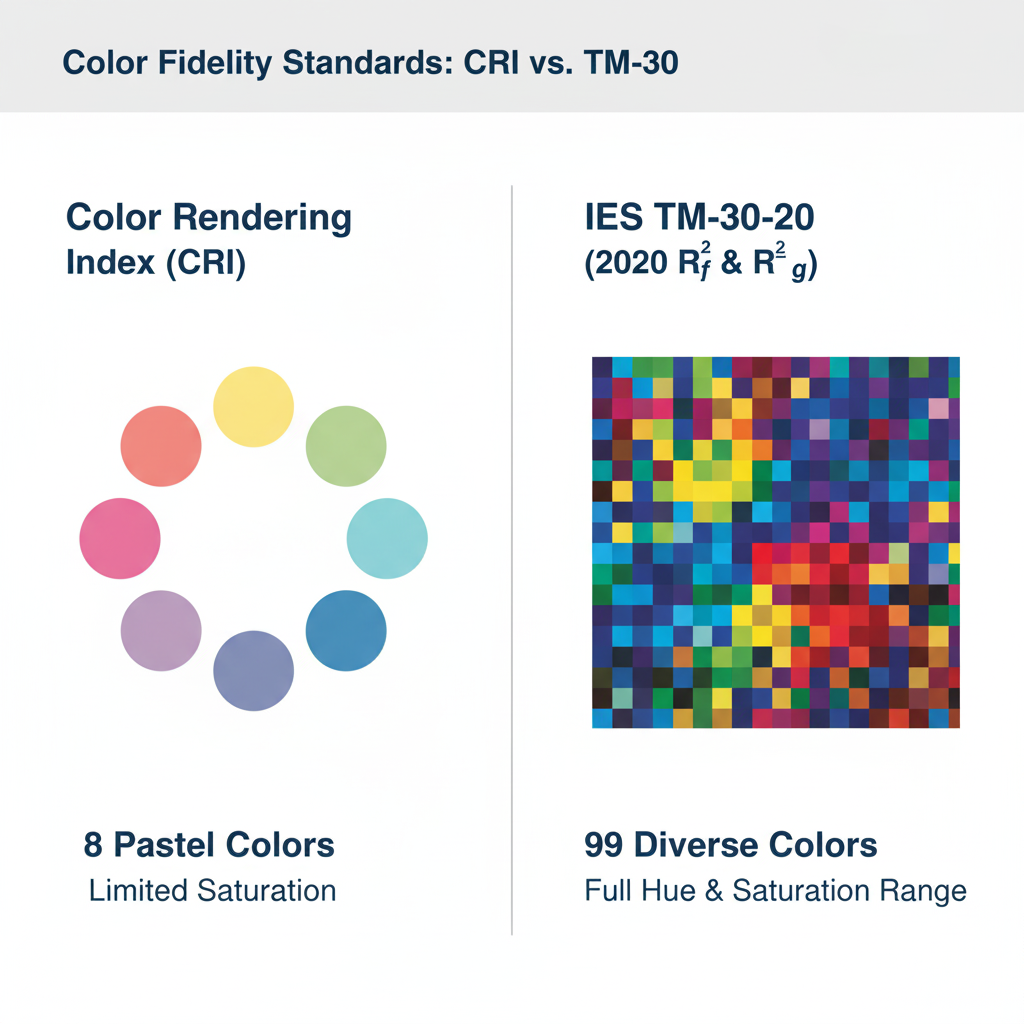
For a long time, CRI was the only metric that mattered. It works by comparing the light’s reflection off of eight standard, pastel color samples. A high CRI light source, in theory, makes these colors appear as they would under the sun.
The Limitation of CRI: While foundational, CRI is an outdated and incomplete system. Its eight color samples are not saturated, meaning it doesn’t effectively measure how a light performs on deep, rich colors like a vibrant red lipstick or a royal blue sapphire. A light can have a high CRI score of 95+ but still make vibrant colors look flat or distorted. This is a critical failure for luxury goods, where color vibrancy is paramount.
The Modern Standard: A Deeper Look with TM-30
Recognizing the shortcomings of CRI, the Illuminating Engineering Society (IES) developed a more comprehensive and accurate system: TM-30. This isn’t a replacement for CRI, but rather a far more sophisticated tool that provides a complete picture of light quality.
To make the differences clear, let’s compare CRI and TM-30 directly:
| Feature | Color Rendering Index (CRI) | TM-30 |
| Color Samples | 8 pastel colors (low saturation) | 99 colors (wide range of hues and saturations) |
| Key Metrics | Ra (Measures color fidelity only) | Rf (Fidelity) & Rg (Gamut/Saturation) |
| Primary Use | General-purpose lighting assessment | Detailed, professional applications (retail, museums, healthcare) |
| Insight Provided | “Is the color accurate?” | “Is the color accurate, and is it vibrant or dull?” |
As the table shows, TM-30’s Fidelity Index (Rf) is a more accurate successor to CRI, while its Gamut Index (Rg) provides crucial data on color saturation that CRI completely ignores. This level of detail is essential for creating specific moods and highlighting products effectively.
The Foundation of It All: Spectral Power Distribution (SPD)
So, what determines if a light will have a good CRI or TM-30 score? The answer lies in its Spectral Power Distribution (SPD).
Think of natural sunlight as a complete rainbow, containing a full, continuous spectrum of every color. An SPD graph shows which colors (wavelengths) are present in a light source and at what intensity.
- A “Good” SPD: A high-quality light source has a full and balanced SPD. It emits energy across the entire visible spectrum, much like the sun. This ensures that no matter what color an object is, the light provides the necessary wavelengths to reflect that color accurately.
- A “Bad” SPD: A low-quality LED light often has a “spiky” SPD with strong peaks in some colors and deep valleys in others. Even if it produces “white” light, it’s missing crucial color information, causing certain colors to look dull and lifeless.
The Seeposh Difference: Beyond the Numbers
At Seeposh, our commitment to “light quality” transcends simply meeting a minimum CRI score. We obsess over the details that luxury brands depend on.
- We Engineer for a Full Spectrum: Our LED solutions are designed from the ground up to produce a full, continuous Spectral Power Distribution.
- We Utilize TM-30: We use the advanced TM-30 metrics to fine-tune our lighting for specific applications.
- We Leverage Experience: With a decade of serving the most demanding clients, we understand that the right light isn’t just a utility; it’s a crucial part of the brand experience.
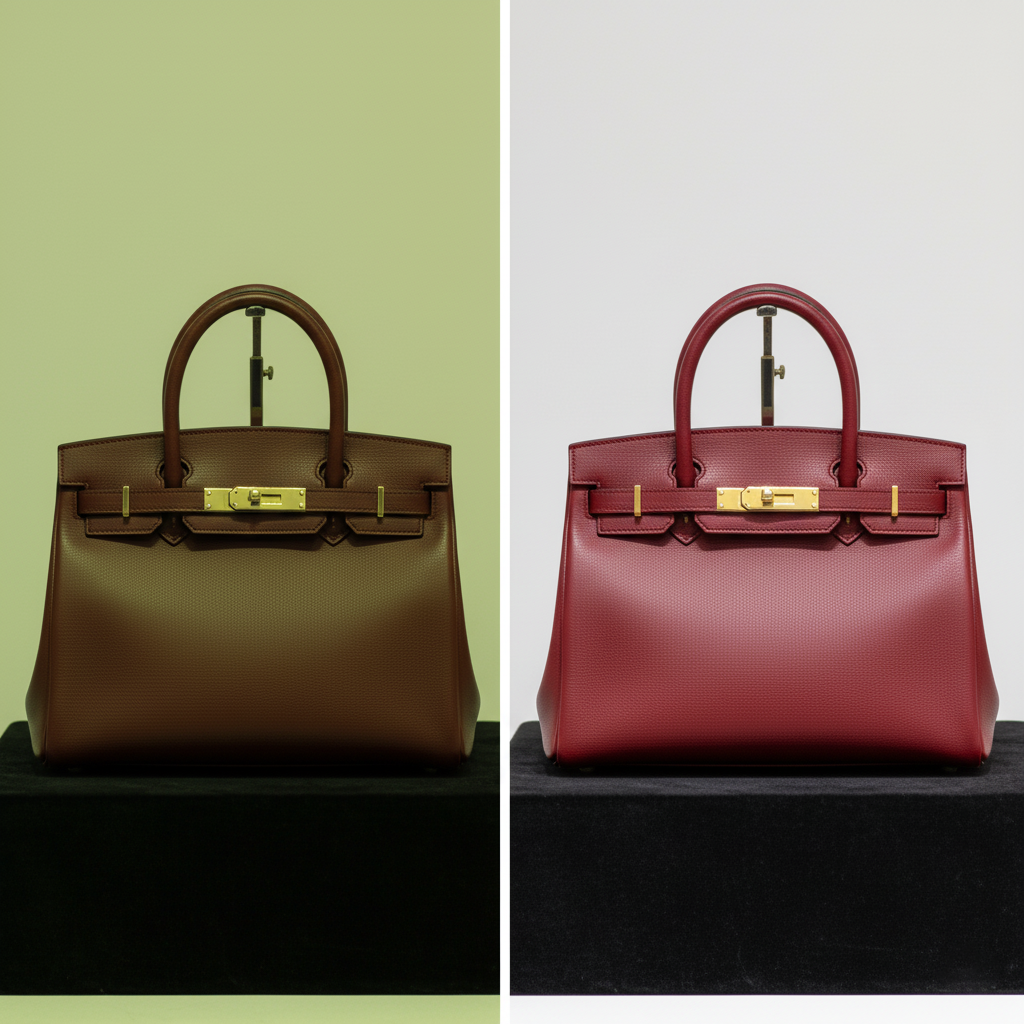
Don’t let subpar lighting compromise the beauty and value of your products. It’s time to look beyond CRI and embrace the science of true color fidelity.
Ready to see your products in their best possible light?
Frequently Asked Questions (FAQ)
1. Is a high CRI light always better?
Not necessarily. A light can have a high CRI of 95+ but still render deep, saturated colors poorly. That’s why modern standards like TM-30, which also measure color saturation (gamut), are essential for applications where true color is critical, like in luxury retail.
2. What CRI and TM-30 scores should I look for in luxury retail lighting?
For luxury environments, we recommend a CRI or Rf (Fidelity) of 95 or higher. The ideal Rg (Gamut) score depends on the desired effect. A score of 100 is true to life, while a slightly higher score (e.g., 105) can make colors appear more vibrant and appealing. It’s best to consult a lighting specialist to match the light to your specific products.
3. Can good lighting really increase sales?
Absolutely. High-quality lighting with excellent color rendering directly impacts customer perception. It makes products look more attractive and valuable, builds trust in the product’s quality, and creates a more inviting, premium atmosphere—all of which contribute to a better customer experience and can positively influence purchasing decisions


